
Defining the House Edge: Mathematics Behind the Reels
The Most Popular Casino Games Explained for Smart Players
While many modern games rely entirely on random number generators, a surprisingly large number of casino classics—like blackjack and poker—involve a significant degree of player skill and strategy. These games pit players against mathematical probabilities, where understanding the odds and making calculated decisions can reduce the house edge. The primary benefit of playing these games is the immersive thrill of risk and reward, combined with the potential for strategic mastery to influence short-term outcomes. To use them effectively, a player must first learn the specific rules and basic strategies for each game to maximize their chances of success.
Defining the House Edge: Mathematics Behind the Reels
The house edge is the mathematical advantage built directly into every casino game, representing the average percentage of each bet the casino expects to keep over time. For slot reels, this is determined by the mathematics behind the reels, specifically the random number generator (RNG) and the paytable. The RNG creates thousands of outcomes per second, and the paytable assigns specific payouts to each symbol combination. By comparing the probability of hitting a winning combination to the payout it offers, the game’s expected return is calculated. For example, if a slot pays 90 cents for every dollar wagered on average, the house edge is 10%. This built-in statistical advantage ensures that while you can win in the short run, the math guarantees profit for the casino over millions of spins.
How probability shifts odds in classic table contests
In classic table contests, probability isn’t just math—it’s the invisible dealer that subtly twists odds. In roulette, the zero (or double zero) tilts probability against you, making a straight-up bet’s true odds slightly worse than the payout suggests. In blackjack, a deck removed of aces shifts the probability of a blackjack payout, wrecking composition-dependent bets. Craps relies on probability to define which numbers hit most; the 7 appears six ways, while the 2 only appears one. This probability shift means your “sure thing” bet on a field number actually carries a built-in deficit, quietly favoring the house over time.

Why randomness matters more than superstition
Trusting superstition in casino games is a losing strategy because the house edge is built on pure mathematics, not luck. Randomness, enforced by Random Number Generators on digital slots and physical shuffling on tables, ensures every spin or hand is an independent event. Randomness defines the house edge by creating a fixed, predictable long-term probability, while superstition only distorts your decision-making. Believing a lucky charm or a ritual changes the outcome ignores that the game’s math remains constant.
- Superstition encourages chasing losses based on false patterns, randomness ensures each outcome is fair and predetermined by odds.
- Randomness allows you to calculate your true expected loss per bet, superstition gives no quantifiable advantage.
- Superstition leads to inconsistent bets, randomness allows disciplined bankroll management based on known probabilities.
RTP percentages and their real-world impact on bankrolls
RTP percentages directly shape your bankroll’s lifespan. A slot with 96% RTP statistically returns $96 for every $100 wagered, but the real-world impact on bankrolls comes from volatility: low-RTP games can drain funds faster due to frequent small losses. For example, choosing an 88% RTP machine over a 98% one means your bankroll might last only half as long on average, leaving less room for lucky streaks. Even small RTP differences compound sharply across hundreds of spins.

| RTP | Bankroll Impact (per $100 over 1,000 spins) |
|---|---|
| 96% | Theoretical loss ~$40 (higher chance of extended play) |
| 92% | Theoretical loss ~$80 (bankroll halves faster) |
Slot Machines: From Mechanical Levers to Digital Spins
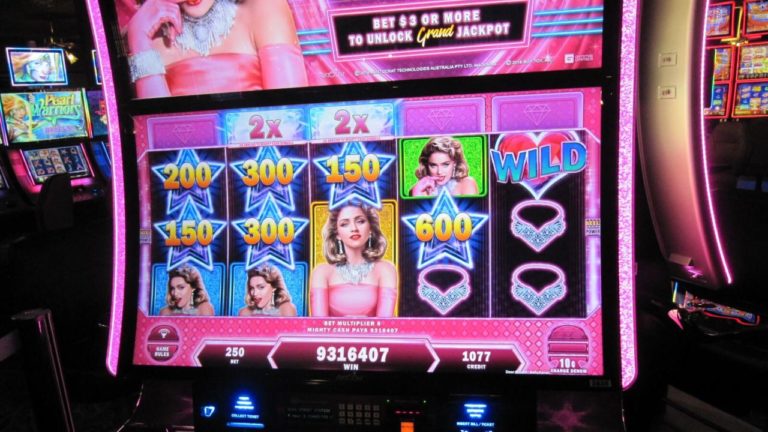
The evolution from mechanical levers to digital spins has fundamentally reshaped how you engage with slot machines in modern casinos. Where the original one-armed bandits relied on physical reels and a single payline, today’s video slots use Random Number Generators to determine outcomes, offering hundreds of ways to win and complex bonus rounds. Always check the paytable before you spin to understand symbol values and volatility, as a high-volatility digital slot will pay less frequently but with larger potential wins compared to low-volatility classics. Manage your bankroll around the machine’s minimum bet—a digital spin often allows tiny coin sizes, extending play, but max betting is usually required to unlock progressive jackpots. The tactile lack of a lever is a trade-off for immersive themes and interactive mini-games that you control with a button press.
Understanding paylines, volatility, and bonus triggers
To master slots, you must decode three pillars: paylines, volatility, and bonus triggers. Paylines are the fixed patterns that determine winning combinations—more lines increase your chances but raise stake costs. Volatility dictates risk: high volatility offers rare, massive payouts; low volatility delivers frequent, smaller wins. Bonus triggers, like scatter symbols or unique reel events, unlock free spins or pick-a-prize rounds often with multipliers. Choosing a game with 20+ paylines, medium volatility, and easy trigger conditions (e.g., 3 scatters) balances consistent returns with thrilling feature access. Always check the paytable before spinning.
| Feature | Practical Impact | User Strategy |
|---|---|---|
| Paylines | Determine win frequency & cost per spin | Select 20–50 lines for balanced coverage |
| Volatility | Gap between win sizes & hit frequency | High for jackpot hunts; low for bankroll preservation |
| Bonus Triggers | Entry to free spins, multipliers, or mini-games | Prioritize triggers requiring 3+ scatters |
Progressive jackpots and the allure of life-changing sums
Progressive jackpots amplify the base slot experience by linking a fraction of every wager across a network into a single, escalating prize pool. This mechanism directly creates the allure of life-changing sums, as a small bet can trigger a payout that dwarfs typical casino wins. The psychological pull is less about the game’s mechanics and more about the tangible, financial transformation the jackpot represents. Players are drawn not by frequent small returns, but by the remote possibility of a network-funded windfall that alters their entire financial reality in a single spin. Each play offers a direct, if improbable, pathway from a modest stake to extraordinary wealth.

Tips for identifying high-payout video slots
To identify high-payout video slots, first check the game’s RTP (Return to Player), which indicates the theoretical percentage of wagered money returned over time—look for rates above 96%. Volatility is equally critical: low-volatility slots offer frequent but smaller wins, while high-volatility slots provide larger, less frequent payouts; choose based on your bankroll. Examine the paytable for bonus features like free spins or multipliers, which boost payout potential without extra cost. Avoid progressive jackpot slots unless targeting a massive win, as their base-game RTP is often lower.
| Aspect | Low Payout | High Payout |
|---|---|---|
| RTP | Below 94% | 96% or higher |
| Volatility | Medium-high | Matches your risk tolerance |
| Bonus Frequency | Rare or costly | Triggered often with multipliers |
Card Games That Test Skill and Nerve
Card games that test skill and nerve transform casino tables into intense psychological battlegrounds. In Texas Hold’em poker, reading opponents and executing calculated bluffs often outweighs the luck of the draw, rewarding discipline and emotional control. Blackjack demands sharp decision-making through basic strategy and card counting, where a single misplay can cost your hand. The real test of nerve emerges when you must double down or raise under pressure, turning each bet into a high-stakes judgment call. Unlike pure chance games, these formats let your competence directly shape outcomes, making every round a duel of wits against the house or other players.
Blackjack strategies: when to hit, stand, or double down
In Blackjack, basic strategy dictates hitting when your hand totals 8 or less, or against a dealer’s strong upcard (7 through Ace) if you have 12–16, as you must improve. Stand on hard 17 or higher, or on 12–16 when the dealer shows a weak 2 through 6, hoping they bust. Double down specifically when your hand is 9, 10, or 11 and the dealer’s upcard is low (2–6 for 9; any card for 10/11). This aggressive move doubles your bet for a single card, maximizing advantage in favorable counts.
Q: When should you never double down?
A: Never double down when your hand is hard 12 or higher, or when the dealer shows an Ace, as the risk of drawing a low card outweighs potential gain.
Poker variants beyond Texas Hold’em: Omaha and Stud
While Texas Hold’em dominates, Omaha and Stud variants deepen the strategic challenge in casinos. Omaha gives each player four hole cards, forcing them to use exactly two with three community cards, creating far more potential hands and demanding rigorous hand-reading. Seven-Card Stud, devoid of community cards, relies on memory and deduction from opponents’ exposed cards. In Stud, your starting three cards largely dictate your odds, making early fold discipline critical. Both variants punish passive play and reward precise pot calculation, offering a richer test of nerve for players seeking complexity beyond Hold’em.
| Variant | Key Skill | Hole Cards |
|---|---|---|
| Omaha | Hand combination analysis | 4 (use 2) |
| Seven-Card Stud | Memory & visible card tracking | 2+1 down (7 total) |
Baccarat’s low house edge and simplicity appeal

Baccarat’s appeal in the casino stems directly from its minimal house edge and straightforward rules. Unlike complex table games, players only choose to bet on the Player, Banker, or Tie, with no further decisions required. The Banker bet carries a house edge of roughly 1.06%, while the Player bet sits at 1.24%—among the lowest in any casino game. This simplicity allows newcomers to engage immediately without studying strategy, while the low statistical disadvantage keeps experienced players focused on nerve-testing streaks rather than complex odds. The game’s elegance is its lack of player control, turning each round into a pure test of betting nerve.
- Banker bet has a 1.06% house edge, among the lowest in any casino game.
- No player decisions beyond selecting which side to bet on.
- Rules are fixed, requiring no memorization or skill to participate.
- Low edge means slower bankroll depletion for casual players.
Wheel-Based Thrills: Roulette and Its Variations
The wheel spins, a blur of red and black, and the clatter of the ball echoes like a heartbeat. In Roulette, you place chips on numbers or colors, riding the physics of the wheel—a pure gamble against a 2.7% house edge (European single-zero). Variations like French Roulette add the *La Partage* rule, returning half your even-money bet on zero, softening a loss. Multi-wheel games let you bet across several wheels simultaneously, amping the sensory overload. Each spin rewrites your reality in an instant, a thrill no algorithm can fake. The dealer sweeps the felt, and you chase the impossible—a precise number hitting against 37 or 38 slots.
European vs. American layouts: the single-zero advantage
The core difference between European and American roulette layouts is the single-zero advantage. The European wheel has a single green zero (37 pockets), while the American version adds a double zero (38 pockets). This seemingly small change cuts the house edge for European roulette to 2.7%, compared to 5.26% on American tables. For players, this nearly halves the casino’s statistical advantage on all even-money bets. The single-zero advantage translates directly into better odds for every spin you place, making the European layout the clearly superior choice for any strategic player.
How does the single-zero advantage change my chances on a straight-up bet? In American roulette, your odds of hitting a single number are 37-to-1; in European roulette, those odds improve to 36-to-1, giving you a better shot at the same payout.
Betting systems like Martingale and their limitations
The Martingale system, where players double bets after each loss to recover deficits, seems foolproof but collapses against table limits. A losing streak quickly escalates bets beyond maximums, rendering the system useless. Bankroll size is the critical limitation, as an infinite bankroll would be required to guarantee recovery. Table limits are designed to break this progression, not random chance. Even with no limits, a string of losses exhausts funds exponentially; six consecutive losses on a $10 minimum bet requires $640. The system ignores the house edge on each independent spin, offering no mathematical advantage.
Inside vs. outside wagers for risk management
For risk management, the fundamental split is between inside and outside wagers. Outside bets—red/black, odd/even, high/low—cover nearly half the wheel, offering near 50% win probability, which conserves bankroll through frequent, small payouts. Inside bets target specific numbers or small groups, drastically reducing win probability but offering multipliers of 5:1 to 35:1. Strategic bankroll preservation dictates that outside wagers form the core for players minimizing variance, while inside bets function as high-risk, low-probability deviations. A disciplined player allocates 70–80% of stakes to outside wagers, using only discretionary profit for isolated inside bets to manage ruin risk.
| Aspect | Outside Wagers | Inside Wagers |
|---|---|---|
| Win Probability | ~47–48% | ~2.7–10.8% |
| Payout | 1:1 or 2:1 | 5:1 up to 35:1 |
| Risk per Spin | Low (near even money) | High (low odds of hitting) |
| Bankroll Impact | Gradual erosion or growth | Rapid depletion or spike |
Dice Games Where Luck Takes the Lead
The clatter of dice on the felt is a pure gamble, where no strategy can bend the outcome. In games like Craps, you watch your bet rise or fall with every roll, a raw, heartbeat-driven experience. The only question is, „How lucky do you feel right now?” Q: What separates a lucky player from a skilled one in these dice games? A: Nothing—the dice decide everything in the moment. You learn to accept the loss or celebrate the win without blaming your own choices, because luck is the only lead.
Craps basics: pass line, come bets, and odds offers
In craps, the pass line bet starts the action, winning on a come-out roll of 7 or 11 and losing on 2, 3, or 12; any other number establishes a point. Once a point is set, a come bet with free odds offer allows you to place a second bet that wins on a subsequent 7 or 11 but loses on 2, 3, or 12, also establishing its own point. The Odds offer gives you a supplementary bet behind either pass line or come bets, paying true mathematical odds with zero house edge. The sequence is straightforward:
- Place a pass line bet before the come-out roll.
- After the point is set, optionally make a come bet on the next roll.
- Always take the maximum available Odds offer behind your pass or come bets to reduce the overall house advantage.
Understanding the flow of a craps table for newcomers
Stepping up to a craps table can feel chaotic, but the flow follows a clear rhythm. First, the shooter throws the dice, beginning the „come-out” round where the point is established. Once set, the goal shifts to hitting that number before a seven appears. Understanding the flow of a craps table for newcomers relies on watching the puck—a white disc marked „ON” placed on the point number. You bet before each roll, with payouts occurring immediately after each decision. Stick to simple wagers like Pass or Don’t Pass to learn the pace.
- Bet only after the puck is set to avoid confusion.
- Watch the stickman’s hand signals to know when to place chips.
- Wait for the dealer to clear losing bets before new ones are accepted.
Alternative dice contests like Sic Bo and their cultural roots
Sic Bo, an ancient Chinese dice contest meaning „precious dice,” plunges players into a whirlwind of luck with roots stretching back to Hong Kong gambling dens. Unlike craps, this game uses three dice tumbling in a cage, with bets placed on specific totals or combinations. Its cultural legacy in Asia infuses every spin with a sense of ritual—from lucky number 8 to the dragon-themed table layouts. The chaotic thrill of predicting triple outcomes or specific pairs taps directly into a tradition where fate, not skill, reigns supreme, offering a vibrant, fast-paced alternative for those seeking pure chance.
Live Dealer Experiences: Bridging Digital and Reality
Live dealer experiences dismantle the barrier between virtual play and physical authenticity by streaming a real human croupier into your browser, managing tangible cards and a spinning roulette wheel from a professional studio. This fusion lets you watch chips stack and the dealer react to your actions in real time, replicating the social nuance of a brick-and-mortar floor. You can chat with the dealer and other players, creating a communal dynamic that pure RNG games lack. The subtle tension of watching a live shoe being shuffled injects a psychological layer that algorithms cannot replicate. Ultimately, these games deliver the convenience of digital access while preserving the tactile, human-centered flow found in traditional casino pits, making every hand or spin feel uniquely shared rather than solitary.
Streaming technology and real-time interaction with croupiers
Streaming technology transmits high-definition video from dedicated casino studios directly to a player’s device, enabling real-time interaction with croupiers during live dealer games. Low-latency encoders and multiple camera angles ensure the dealer’s card shuffling or roulette wheel spin is visible without perceptible delay. Players submit bet commands http://www.slotsofvegas-canada.ca/ through an on-screen interface, which the croupier sees and resolves immediately, preserving game pace. This synchronization relies on dedicated fiber-optic links and server-side buffering to eliminate desync between video feed and user input.
Q: How does streaming technology prevent lag when placing a bet during real-time interaction?
A: The system uses WebRTC or RTMP protocols with sub-200ms latency, prioritizing bet packets over video frames to keep the croupier’s response instantaneous.
Benefits of chat features and professional hosting
Live dealer games become far more engaging thanks to chat features and professional hosting. You can directly interact with the host, asking about game rules or simply chatting, which removes the sterile feel of standard RNG play. This real-time banter creates a social vibe, making you feel like you’re at a real table. The host’s personality and commentary keep the pace lively. For practical benefits, this setup offers personalized game guidance and a more immersive experience.
- Get instant answers to questions about betting options directly from the dealer.
- Enjoy a friendlier, less intimidating atmosphere than a physical casino floor.
- Build a sense of community by chatting with other players at the table.
- Receive tailored tips on game flow from the professional host.
How live tables replicate the social buzz of brick-and-mortar venues
Live tables recapture the social buzz of brick-and-mortar venues by embedding real-time chat and audible dealer interactions directly into the gameplay. You hear the shuffle of chips, the dealer’s laughter, and other players’ quick reactions, recreating the ambient camaraderie of a physical pit. This shared immediacy transforms a solitary screen into a communal felt table where collective gasps and celebratory cheers feel instinctive, not forced. The live dealer social interaction mirrors the organic banter of a casino floor, turning digital play into a vivid, human-centered experience that pulls you into the moment.
Responsible Wagering: Setting Limits and Staying in Control
When you play casino games, responsible wagering starts with setting clear limits before you spin or deal. Decide on a strict loss cap and a time limit for each session, and stick to them no matter what. Treat your budget as the cost of entertainment, not an investment.
A key insight is that these limits give you control, keeping the game fun instead of letting it control you.
If you hit your boundaries, walk away immediately—don’t chase losses with another bet. Use the casino’s built-in deposit or session timers if available. Staying in control means enjoying the thrill without letting it override your pre-set plan.
Bankroll management tactics for extended play
Effective bankroll management tactics for extended play begin by dividing your total funds into session units, capping each session’s loss at 5% of that unit. Never chase losses by dipping into tomorrow’s budget; instead, set a win goal—like 20% above your session unit—and walk away once reached. Preserving capital through discipline transforms high-variance swings into survivable stretches. A fixed bet percentage, typically 1–2% of your current bankroll per wager, prevents rapid depletion during cold streaks and compounds gains during hot ones.
| Tactic | Purpose for Extended Play | Example |
|---|---|---|
| Session Unit Split | Limits exposure per outing | $200 bankroll → 4 x $50 sessions |
| Fixed Percentage Betting | Aligns risk with remaining funds | 1% bet on $100 bankroll = $1 wager |
| Win Goal & Stop-Loss | Locks profits, prevents revenge gambling | Stop at +$10 or -$5 per session |
Recognizing signs of problem behavior and seeking support
Recognizing signs of problem behavior requires monitoring emotional and financial patterns during play. Key indicators include chasing losses, wagering beyond planned budgets, lying about time spent, or feeling irritable when unable to gamble. If these behaviors emerge, promptly seeking support from specialist helplines or self-exclusion programs can halt escalation. A crucial comparison is between early versus advanced stages:
| Early Signs | Advanced Signs |
|---|---|
| Occasional overspending | Borrowing money to gamble |
| Hiding small sessions | Neglecting work or family |
| Mild guilt post-play | Uncontrollable urge to continue |
Immediate action upon noticing any single red flag—such as setting deposit limits or contacting a counselor—prevents deeper harm. Support resources are designed for discreet, non-judgmental assistance focused solely on restoring control over wagering behavior.
Tools like deposit caps and self-exclusion options
For casino games, deposit caps and self-exclusion options are your primary guardrails. Set a daily or monthly deposit limit before you spin; once hit, transactions block automatically. If you need a stronger pause, self-exclusion tools lock your account for a chosen period—whether 24 hours or six months. This isn’t about punishment, but reclaiming control before impulse takes over. The sequence works simply:
- Access your account settings under „Responsible Gambling” or „Limits.”
- Input your chosen cap for deposits or loss amounts.
- Activate self-exclusion for mandatory break with no reversal during that term.
These tools put immediate, user-triggered boundaries around your gameplay.
Emerging Trends Shaping the Floor of Tomorrow
The floor of tomorrow is being reshaped by biometric gaming stations, where facial recognition personalizes your favorite slot themes and adjusts table limits instantly. Physical chips are vanishing, replaced by wireless RFID betting that tracks your wagers on digital layouts without a dealer’s touch. Haptic feedback floors vibrate subtly beneath your feet, syncing with progressive jackpots to build anticipation without a sound. Interactive holographic dealers now float beside live tables, letting you control side bets through gesture-based screens. Every surface becomes a responsive portal, transforming passive play into an immersive, real-time dialogue between you and the game.
Virtual reality environments for immersive play
Virtual reality environments for immersive play recast classic casino games into fully navigable 3D spaces where players physically reach to place chips or pull a slot lever. The digital floor replicates ambient sound and haptic feedback, so the tactile click of a roulette ball or the shuffle of a deck feels authentic through handheld controllers. Immersive VR casino environments eliminate screen distance, placing the player inside a virtual lobby with real-time social avatars at adjacent tables. This spatial presence shifts decision-making from reactive clicking to deliberate, embodied actions requiring physical movement.
- Hand-tracked interaction for direct manipulation of virtual chips, cards, and dice
- Dynamic 360° audio that pinpoints the direction of a winning cheer or a dealer’s voice
- Customizable avatars that mirror user gestures for non-verbal table communication
Blockchain-based platforms and provably fair algorithms
Blockchain-based platforms let you verify every bet, thanks to provably fair algorithms. Before a round, a hashed seed is shared; after, the actual seed and nonce are revealed, letting you check the result wasn’t tampered with. This transparency eliminates reliance on the casino’s word alone.
Q: How does a provably fair algorithm protect my bet?
A: It uses cryptographic hashes so you can confirm each outcome is random and unaltered, giving you direct proof of fairness.
Mobile optimization and the rise of instant-play gaming
Modern casino games now load directly in your phone’s browser, ditching downloads completely. Instant-play gaming relies on mobile optimization to shrink file sizes and streamline touch controls, so slots and table games feel responsive even on slower data. Wonky menus and tiny buttons are out; adaptive layouts ensure smooth swiping and tapping. Q: Does instant-play drain my battery faster than a downloaded app? A: Usually less, because optimized HTML5 code manages resources smarter, letting you play longer without recharging.